Leather glove quality control & inspection
Quality Control for Leather Work Gloves
How we check leather work gloves from the raw hide to the sealed carton, how we work with third-party inspectors, and how to ask for the test reports your market needs.
- Checks at every production stage
- Third-party inspection welcome
- Test reports shared for the exact article
Questions first? info@najafimpex.com WhatsApp
Why quality control starts early
Most glove defects begin before the glove is sewn
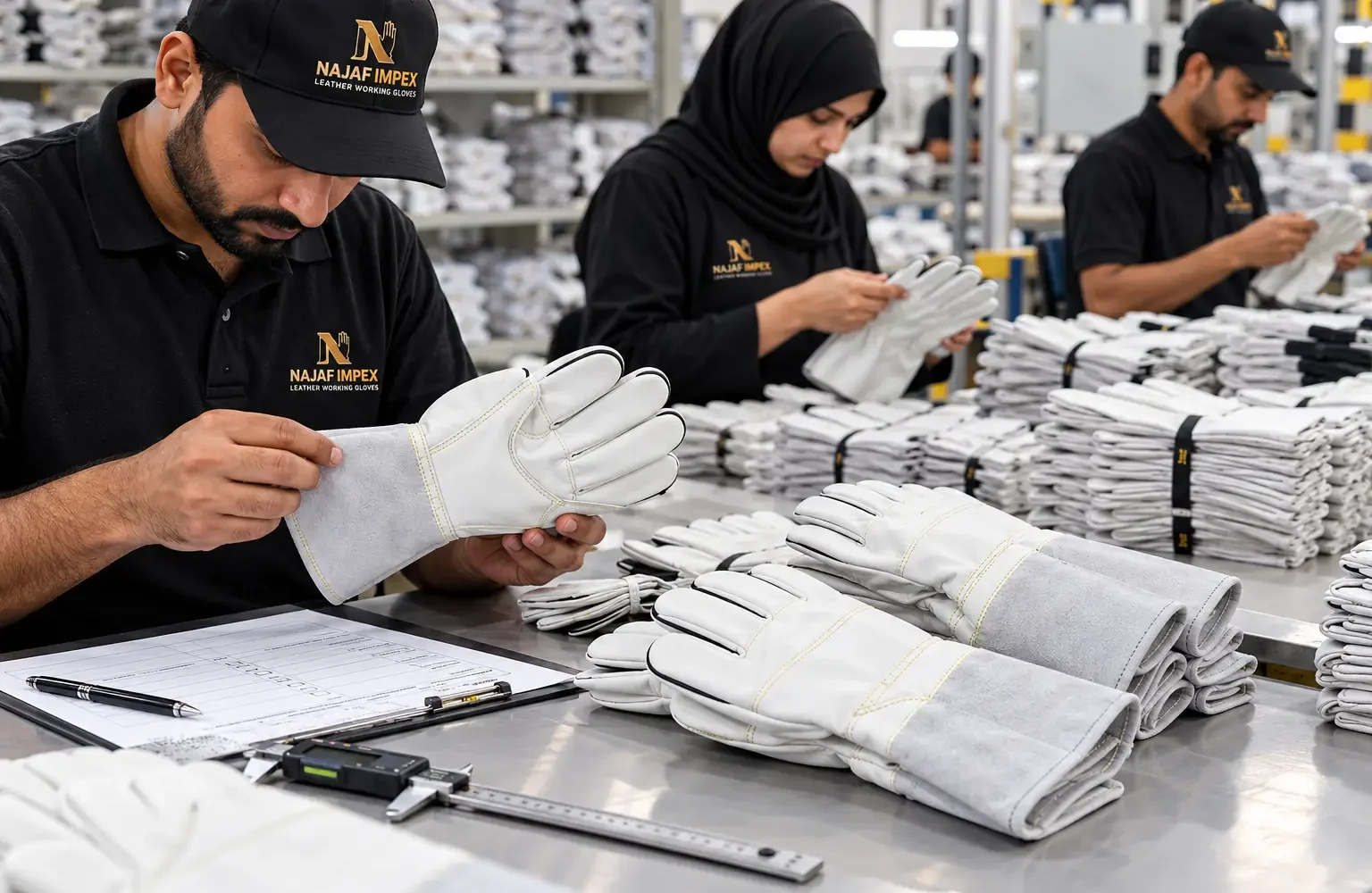
A soft hide cut into palms, the wrong thread on a welding seam, sizes that drift across a batch: these problems start early, and they are expensive to fix once gloves are finished. That is why our checks start with the raw leather and continue on the production floor, not just at the end.
Every order is checked against two references: the written specification and the sample you approved. Both stay on file, so the same checks apply to every repeat order. If you are comparing suppliers, the factory audit checklist for leather safety gloves manufacturers further down this page shows what to ask.
What we check on every order
- Leather grade, thickness, color and defects
- Cut parts against the pattern
- Thread, stitch density and seam strength by hand pull
- Reinforcements, cuffs, linings and labels
- Finished sizes against the size chart
- Pairs, counts and carton marks
Inspection stages
From raw leather to the sealed carton
Raw material inspection
Our quality control criteria for sourcing raw glove leather cover grade, color, thickness and visible defects. Hides that do not match the agreed grade are set aside before cutting.
Leather grading and thickness
Split leather thickness is measured on samples from each lot. Grain cowhide is checked for scars, holes and thin spots in the areas that become palms and fingertips.
In-line production checks
Supervisors follow an in-line inspection checklist for cut parts, stitching and assembly, so a loose seam or wrong part is fixed on the spot.
Workmanship and seams
Seams on heavy duty leather welding gloves are checked for thread type and by hand pull. Double palm reinforcement is checked for position and stitching.
Sizing and final inspection
Finished gloves are measured against the size chart and compared with the approved sample for shape, leather, stitching and branding.
Packing check
Pairs, quantities per bag and carton, labels, barcodes and carton marks are checked before cartons are sealed.
The QC process
How we check a leather glove order
Agree the specification
Leather, construction, sizes, labels and any standards, written down and signed off.
Check incoming materials
Leather, thread, fabrics and trims checked against the order.
Check on the line
Cut parts and sewing checked at each stage of production.
Final batch inspection
Finished gloves compared with the approved sample and size chart.
Pre-shipment check
Packing checked, plus your own or third-party inspection if you want it.
Pre-shipment inspection
AQL and third-party inspection
Many importers use AQL standards for pre-shipment inspection of leather safety gloves. AQL (Acceptable Quality Limit) is a sampling method: an inspector checks a set number of pairs from the batch and accepts or rejects it based on how many defects are found. Tell us the inspection level and the limits you use for critical, major and minor defects, and we will agree them with you before production.
Third-party quality inspection for private label leather gloves is welcome. Your own staff or an agency can inspect when goods are finished and packed, before the shipping booking. If you want to know how to check leather work gloves final batch quality control yourself, our buyer guides are a good starting point.
Factory audit checklist for buyers
- Does the factory grade leather before cutting?
- Are cut parts and seams checked during production?
- Is every order compared with an approved sample?
- Are sizes measured against a written size chart?
- Will they accept your inspector before shipment?
- Can they share test reports for the exact article?
Testing and compliance
Test reports, certification and chemical limits
Buyers often ask about EN 388 compliance testing for custom leather work gloves (mechanical risks: abrasion, cut, tear and puncture), the ANSI cut resistance level test for leather safety gloves in North America, and CE certification requirements for custom industrial leather gloves sold as protective equipment in Europe.
A test report covers one glove made from specific materials. A different leather, lining or construction needs its own testing, even if the glove looks the same. So we only share a report for the exact article it covers, and we do not show certification marks for products without matching documents. If your company needs a supplier with ISO certified quality control for leather glove manufacturing, ask us about our current status before ordering.
Chemical rules matter too. In the European Union, leather that touches the skin must meet strict limits on chromium VI. Leather safety gloves can also be tested for pH level and other restricted substances. If you need chromium hexavalent testing, tensile strength testing for goatskin gloves or other lab tests, tell us at the quotation stage so testing by an independent lab can be planned.
Common defects we look for
- Holes, scars or thin spots on palms
- Skipped stitches and open seams
- Missing or misplaced reinforcement
- Twisted fingers or uneven cuffs
- Wrong size labels or unmatched pairs
- Logo position and print faults
Questions
Quality control FAQ
Can we send our own inspector before shipment?
Yes. Your staff or an inspection agency are welcome. Tell us when you order so we can plan the date.
Can you work to our AQL inspection level?
Yes. Tell us the level and defect classes you use and we will agree them before production.
Are your gloves EN 388 or CE certified?
Ask about the exact article. We only state a rating or certification when we can share the matching test report.
Can you test for chromium VI?
Testing is done by an independent lab. Tell us at the quotation stage if your market needs it so it can be planned.
What happens if we find a problem after delivery?
Send photos and details as soon as possible. We review it against the approved sample and specification and agree a fair solution.
Need gloves checked to your standard?
Send us your specification, inspection requirements and any standards your market needs. We will tell you what we can check, what documents exist and what testing would involve.